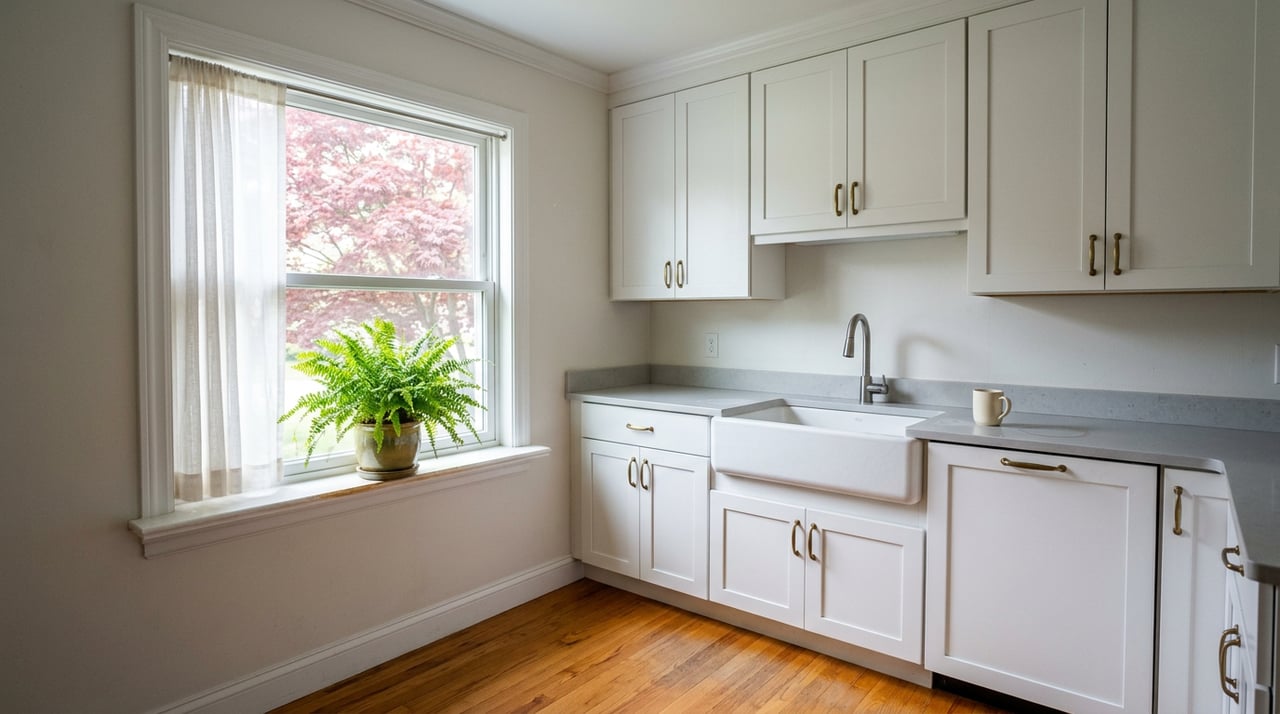
A recent listing for a two-bedroom condo in Temple Hills carried a line most buyers skim past: seller exempt from all disclosures and disclaimers. A few lines down, the same listing noted it was subject to the Freddie Mac First Look Initiative, which reserves the first 30 days of marketing for owner-occupants and nonprofits before investors can make an offer.
Neither clause is a red flag. Both are standard language for a bank-owned sale, and Temple Hills has enough of them that a buyer working this market will run into that phrasing more than once. What trips people up isn't the missing paperwork. It's what most Maryland buyers assume happens when paperwork is missing, and that assumption doesn't hold here.
The Right Most Maryland Buyers Think They Have
Maryland's residential disclosure law, found in Real Property Section 10-702, requires most home sellers to hand buyers one of two forms before a contract is signed: a disclosure statement listing known defects, or a disclaimer stating the home is sold as-is with no warranties. If a seller who owes that form fails to deliver it, the statute gives the buyer a real remedy. The buyer can rescind the contract and get any deposit back, either before receiving the missing statement or within five days after finally getting it.
That five-day window is the piece of Maryland real estate trivia a lot of buyers carry into every deal, even ones they've never closed. It sounds like a built-in safety net: no disclosure, no problem, you can walk. In a typical owner-occupied sale, that's a fair read.
Why That Right Never Turns On for a Bank or an Estate
Section 10-702 also lists categories of sellers who owe no disclosure or disclaimer at all. A lender or its affiliate that took the property back through foreclosure or a deed in lieu of foreclosure is one. A sheriff's sale, tax sale, or sale by court-appointed trustee is another. So is a transfer handled by a fiduciary settling an estate, guardianship, or trust. The Maryland Department of General Services' published disclosure and disclaimer form spells these carve-outs out directly, and the statute itself ties the five-day rescission right to a seller who was required to deliver a statement and didn't.
Read those two pieces together and the gap becomes clear. The rescission right exists to punish a seller who skipped a form they owed. It has nothing to attach to when the law never required a form in the first place. A bank selling a foreclosed rambler isn't violating anything by staying silent. It's complying. There's no missing statement to trigger a five-day clock, because there was never a clock running.
That's the part worth sitting with before you write an offer on anything described as bank-owned, sheriff's sale, or estate sale in Temple Hills. The paperwork gap and the exit-ramp gap arrive together, and the second one is the one nobody mentions.
Why This Shows Up More Often in Temple Hills
This isn't a hypothetical carve-out. Property data trackers covering the 20748 ZIP code, which includes Temple Hills, showed roughly two dozen active foreclosure listings, another dozen bank-owned properties, and close to ten pre-foreclosures as of mid-2026, sitting inside a total pool of a few hundred active listings. That's a meaningful slice of one ZIP code's inventory falling into exactly the categories Section 10-702 exempts.
Temple Hills also carries an older housing stock than a lot of nearby DMV submarkets. Active listings this year have included a rambler on Sharon Road built in 1957, alongside colonials and split-levels from the same era, many advertised with a full list of recent cosmetic work: new roof, new kitchen cabinets, updated bathrooms. Older homes owned for decades, then inherited or lost to foreclosure, are exactly the properties most likely to move through an estate or a lender rather than a longtime resident who can speak to the home's history firsthand. Put the age of the stock and the volume of distressed sales together, and Temple Hills ends up with more no-disclosure transactions running through it than a market with newer construction or fewer estate transfers would see.
The One Disclosure Even an Exempt Seller Still Owes You
There's a partial exception worth knowing, and it comes from federal law rather than Maryland's statute. The Residential Lead-Based Paint Hazard Reduction Act of 1992 requires anyone selling a home built before 1978 to give the buyer an EPA lead-hazard pamphlet, disclose any known lead paint or lead hazards, and allow a ten-day window for a lead inspection if the buyer wants one. That requirement doesn't check whether the seller is a bank, a trustee, or an estate. It applies by build year, full stop.
Given how much of Temple Hills predates 1978, this means a buyer working a foreclosure or estate sale here will typically still receive one piece of federally mandated paper even when the state disclosure is legally absent. It's not a substitute for knowing the home's condition. It's a floor, not a safety net, and it only covers one specific hazard.
Condos Play by a Different Rule
If you're looking at a unit in one of Temple Hills' condo buildings, such as Huntley Square Condominiums, the exemption story changes. Section 10-702 covers the seller's disclosure obligation about the property itself. It has nothing to do with a homeowners association's resale packet, which most Maryland condo and HOA transactions require separately regardless of who's selling. A bank or estate selling a unit still generally has to produce the association's financials, reserve study, rules, and any pending litigation or special assessments through that packet.
That means a condo buyer in an exempt sale often ends up with more documentation than a single-family buyer in the same situation, simply because the building's paperwork exists independent of the seller's status. Anyone comparing a bank-owned rambler to a bank-owned condo in Temple Hills should expect a different amount of information waiting on each deal, not because one seller is more forthcoming, but because a different law governs each document.
What to Do Instead of Waiting for a Disclosure Form
Once you know the rescission right isn't coming, due diligence shifts from reactive to active. A few steps carry more weight in this specific kind of sale:
- Order a full home inspection, including a sewer scope on anything with an older cast iron line, before your contingency period runs out. Nobody is going to tell you what's wrong, so the inspector is the only source of that information.
- Pull the permit history from Prince George's County records for any work the listing claims was recently done, particularly roofs, kitchens, and electrical panels described in flip-style listings.
- If it's a condo, request the HOA resale packet early. It can take weeks to arrive and it's the one document set that isn't optional here.
- Track the listing date if you're an investor. The Freddie Mac First Look Initiative and similar owner-occupant priority windows used by other lenders can keep a property off-limits to you for the first several weeks regardless of price.
- Budget time for a lead inspection if the home was built before 1978 and you have any concern about painted trim, window sashes, or exterior siding.
None of this replaces the seller's knowledge of the house. It replaces the seller's obligation to share it, which is the piece the law removes in exactly these transactions.
Temple Hills isn't a riskier place to buy because of any of this. It's a market where a specific, well-documented legal exemption shows up more often than in most neighboring submarkets, and where the buyer who understands that exemption walks into a stronger negotiating position than the one who assumes Maryland's usual protections travel with every listing.
If you're weighing a foreclosure, estate sale, or as-is listing in Temple Hills and want a second set of eyes on what the paperwork actually says versus what it doesn't, Yolanda Burgess works this market directly and can walk through the specific documents a given deal will and won't include before you write an offer. Schedule a free consultation to start there.


